
There’s a certain moment – usually when someone walks into a room they’ve seen a thousand times – when they suddenly notice how the walls have quietly changed. Maybe it’s the color looking a little dull. Maybe the finish doesn’t catch the light the way it used to. Or maybe it’s simply that the room doesn’t feel like it matches the way the family (or the business) operates anymore.
This happens in homes and workplaces alike, which is why residential and commercial painting ends up being more meaningful than just “freshening up the walls.” In practice, painting is tied to mood, functionality, and even confidence in a space. People respond to their environments more than they admit.
And that’s the thing people often forget: the paint you see is only half the story. The other half is what the painters see before a single stroke goes on the wall.
How Experienced Painters Look at a Space
If you enter a studio of a professional painter, the painter will not look at the same things as you. While you are busy absorbing the color, the painter is taking note of the wall’s texture, the way the corners are becoming darker because of the shadow, the position of the natural light in the afternoon, and the manner in which the previous coats were applied.
This is what makes the difference between the less skilled and the skilled artist painters: a complete understanding of paint and its application prior to the opening of the first gallon.
The energy of a home is one that is characterized by the requirement of comfort, warmth, and the feeling of being at home. Offices or commercial buildings have another type of energy – clarity, order, and professionalism. The same paint color won’t convey the same meaning in both spaces. In the case of the kitchen, bright yellow expresses optimism; however in the case of a conference room, that same yellow might be perceived as distracting rather than uplifting.
Great painters are always on the same wavelength with this. They select the paint not only for the walls but also for the needs of the room. And this is something that even the greatest color sample available at the hardware store cannot explain alone.
Painting a Home: The Quiet Transformation
Residential painting often begins with someone saying, “I think the house needs something.” They can’t always put it into words. The walls may be fine structurally. Nothing is falling apart. But the feeling isn’t the same.
Cabins, townhomes, condos-they all age differently, but the result is always visible in the paint first. Sometimes the solution is as simple as shifting to a softer color. Other times it’s refreshing trim and ceilings to brighten the structure of the home.
In many Phoenix homes, sunlight is the biggest influencer. It creates highlights and shadows that change color perception throughout the day. An off-white might glow warmly in the morning and turn almost cool by evening. A grey that seems neutral in shade may look bluish in direct sun.
This is why residential projects don’t follow rigid rules. They follow light, space, and the homeowner’s routines. When professional painters step in, they pay attention to how each room is lived in – not just how it looks on paper.
And it’s interesting how fast the transformation takes hold. Sometimes, after the last coat dries, homeowners say the same thing: “It feels like we cleaned everything.” That’s the strange magic of paint – it makes the whole home feel refreshed without changing anything else.
Commercial Painting: A First Impression You Don’t Get to Repeat
On the commercial side, paint plays a different role. Walk into a restaurant with fading walls or an office where the reception area feels dim, and you can sense the impact immediately. People don’t always comment on it, but they feel it.
This is where exterior commercial painting becomes crucial, too. The outside of a building is part of the business’s personality. Sun-faded walls can make even a thriving company look neglected. Fresh paint, on the other hand, creates a signal of care – and customers do notice.
Inside a workplace, color has practical effects. Softer neutrals make hallways feel cleaner. Deeper tones help meeting rooms reduce glare on screens. Retail spaces use color intentionally to guide the eye toward products. And industrial spaces benefit from clear markings and durable coatings that help with safety and organization. Commercial painting isn’t just cosmetic; it’s operational.
The Work Behind the Work
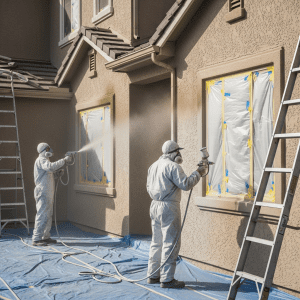
People often think painting is mostly the application. The rolling. The brushing. The visible part. But most professional painters spend more time preparing a wall than painting it. Sanding uneven patches, working around vents and edges, repairing cracks, priming surfaces that need more support – all of this affects how long the results will last.
Prep work is the difference between paint that looks great for a month and paint that still looks good years later.
Good painters know when a wall needs to breathe, when a finish needs to be more durable, and when a surface needs an entirely different kind of coating. And they’ve seen enough homes and buildings to know what will happen if these decisions aren’t made correctly. The real value isn’t the paintbrush – it’s the judgment behind it.
When Paint Changes More Than the Color
This part is subtle, but homeowners and business owners feel it immediately. Fresh paint doesn’t just change the wall; it changes the rhythm of the room.
A home feels more open when the walls brighten. A store feels more intentional when its interior reflects its brand colors. An office feels more structured with consistent tones across departments. And a building’s exterior looks cared for when the finish is crisp, even from the road.
All of this is wrapped into the idea of residential and commercial painting – not as a finishing touch but as a tool for atmosphere. When done well, it’s almost invisible. Not because you don’t notice the change, but because the space starts making sense again.
Final Thoughts
Paint has a quiet influence. It alters how people experience a space without changing the structure or furniture. It also gives homeowners and businesses a way to refresh without renovating, which is why skilled painters continue to be in demand.
Behind every clean wall or renewed storefront is a team that didn’t just bring color – they brought clarity, intention, and the kind of finish that can only come from knowledgeable hands.
Painting is simple to describe but deeply detailed in practice. And when handled by people who understand its impact, it becomes one of the most reliable ways to restore personality to both homes and commercial spaces.